Under pressure: UX in 2026
In the middle of a “perfect storm” for UX, entrepreneurs Nauko Leong and Pieter van Hoof dared to put on an ambitious UX event right in the heart of Rotterdam. Despite, no, because of, this storm, Theater Zuidplein filled up with UX designers and their design managers. The themes: surviving in times like these, refining indestructible design methods, and of course, AI. This is what we always wanted: the emancipation of our work. But… be careful what you wish for.
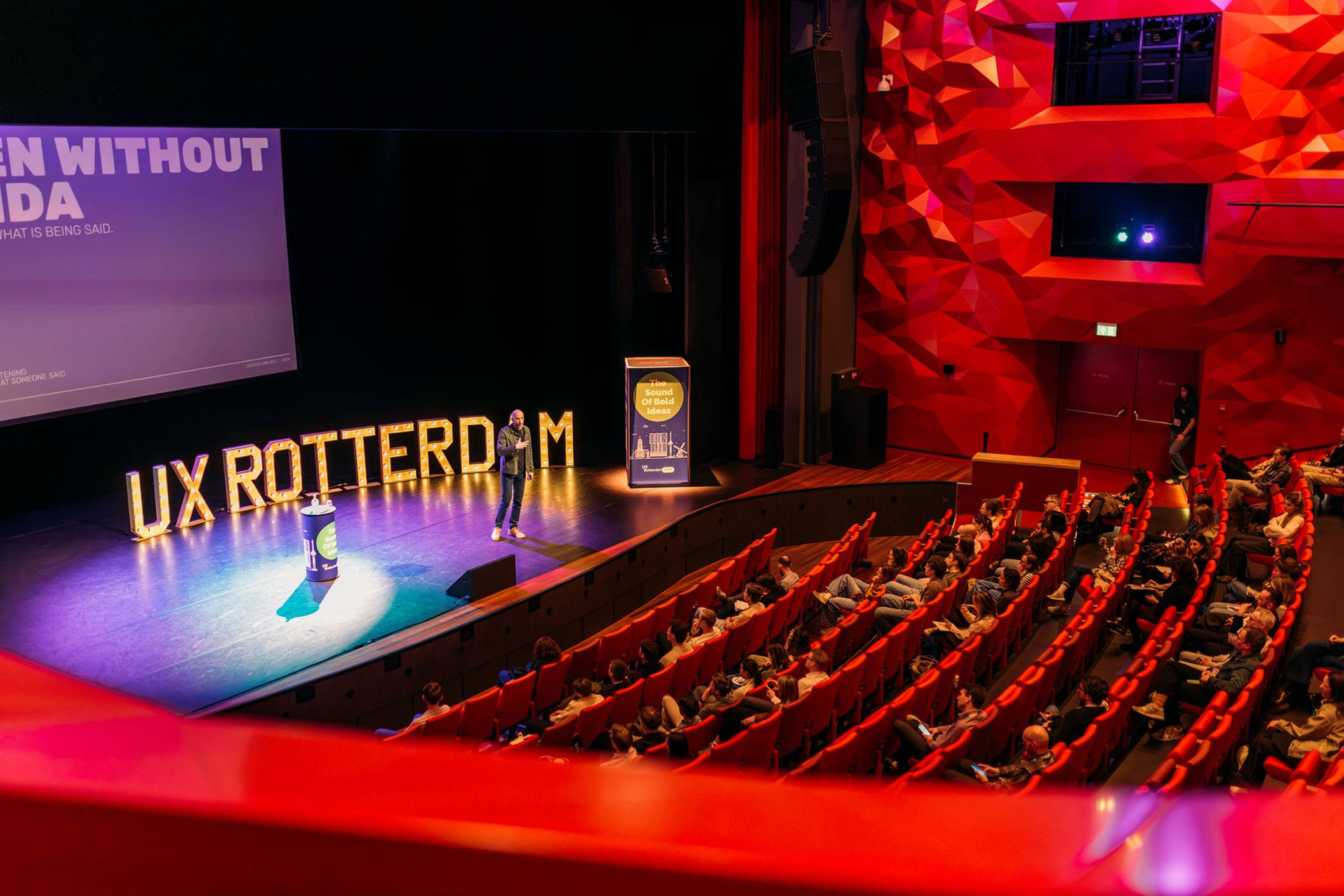
Fire up of Burnout?
Striking: more than a handful of talks at UX Rotterdam focused on mental health: reducing stress, finding purpose, and personal development. Totally in line with the open, honest vibe in the UX community, several speakers shared their personal journey through burnout and other challenges. They offered advice that’s as obvious as it is important: stay true to yourself, protect your values (Creativity! Curiosity! Play!), pay attention to what gives you energy, use your empathy for the people around you, and draw strength from helping each other.
This is not without cause. Around 20% of Dutch employees, especially people under 35, experience burnout symptoms. Among UX designers, that number even rises to nearly 25%. Why UX designers in particular? When I look around the design community, I see how the combination of deep empathy and a huge sense of responsibility can really do us in. Ten years ago we were the “pissed off optimists” of our industry. Let’s go back to that!
Of course this is happening now
The UX world is growing, and UX is increasingly seen as a driver of business KPIs and growth. Finally. The integration of design with business and development, something we’ve been fighting for for 20 years, is starting to take shape. Budgets and stakes are rising. The work is getting more complex. Teams are growing, but they’re still too small.
The protective walls of the Agile mindset, dreamed up in the ’90s by developers to bring common sense and a human scale back to software development, have largely been torn down and replaced by SAFe frameworks where risk management dominates. As designers in these “agile teams,” we no longer experience the “innovate, experiment, fail fast” mentality that gets preached so loudly. UX is seen as important, but expensive.
This is the classic double bind: “Dear designers, use proven methods and help us hit our KPI's. AND bring us that amazing new market-disrupting breakthrough.”
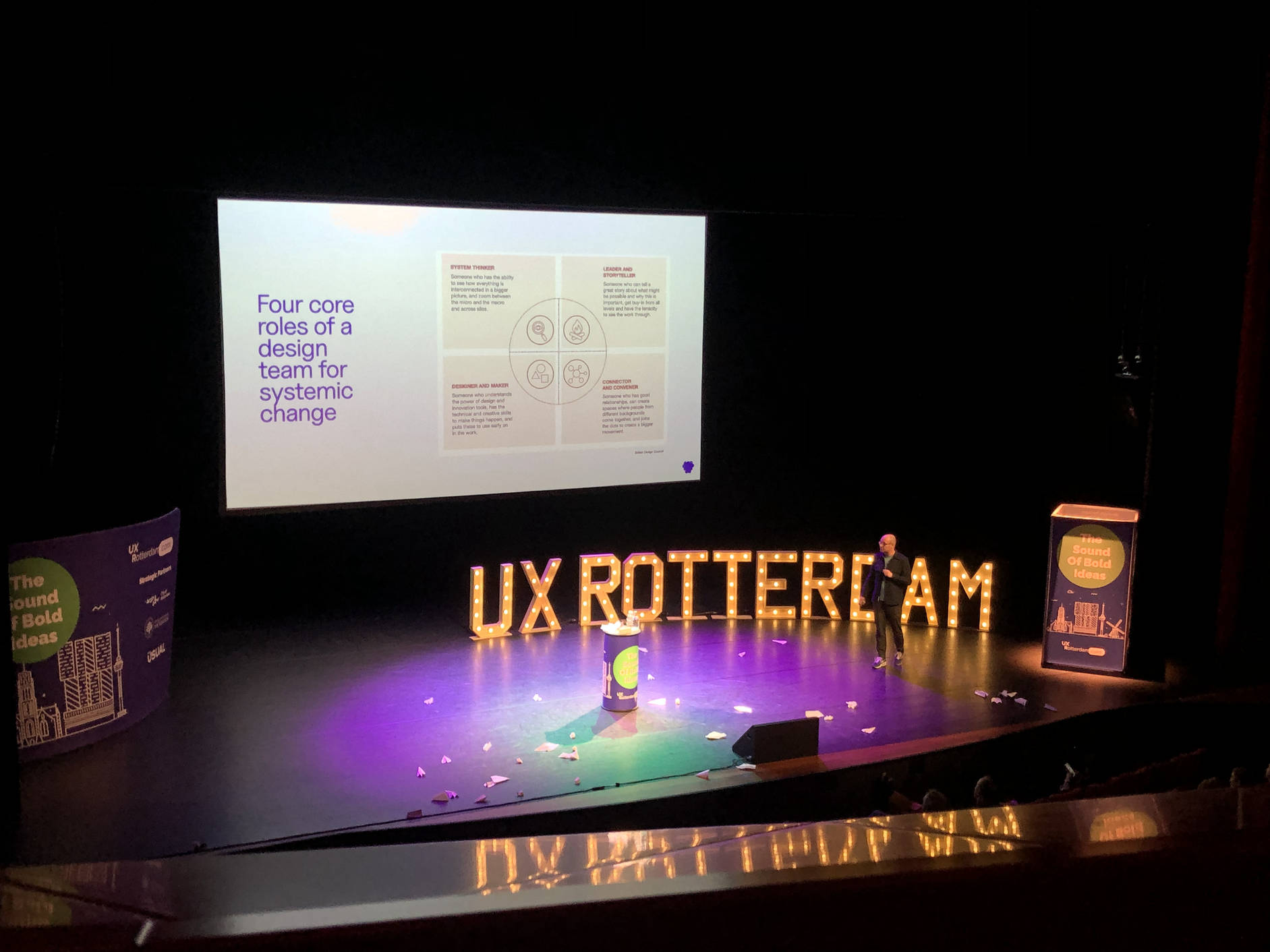
Tupperware
Those proven methods are the Tupperware containers of the design world: indestructible, and you can put anything in them. Co-creation, design research, service design, interdisciplinary teams, even design thinking. The three lenses of innovation: desirability, feasibility, viability. This is the world of design that agencies like IDEO created in the ’90s, and that we at Fabrique have embraced and expanded over the past decades together with the UX community. The subject matter of our work may have changed; the techniques haven’t.
At UX Rotterdam, those Tupperware boxes were opened up again, and that’s exactly how it should be. Journey design for bol., user tests for IKEA, design for inclusivity from Vals Plat, design for buy-in at Rabobank. Genuinely important for inspiring new generations of designers. Still, these methods should quickly become tacit knowledge for designers. The lessons for the coming years lie elsewhere.
AI, the great disruptor. For real this time?
Globally, the AI hype machine is running at full speed. UX Rotterdam was no exception. Almost half the talks were about AI. It’s not the first time we’ve stood on the edge of disruption by the next big thing: gestural interfaces, VR interfaces, Bluetooth beacons, you name it. Time and again we’ve been promised radical disruption. And while it’s too early to see how we’ll come out of the current AI chaos, one thing is clear: things are changing. Yes, this time, for real.
Designers, this is the moment. Again.
Just as we’ve recovered from - or are still right in the middle of - our fight for UX emancipation, we’re being forced to pick a side in the AI debate. Do or die? No. Love or die.
What is certain is that the next period will be defined by abstraction. When organizations get so big that even redesigning journeys is no longer effective, and we first need to design policies. When interface patterns and conventions become straight-up forces of nature (Steve Krug & Luke Wroblewski, what’s up!). When without AI we’d spend days tweaking a single CTA, or with AI we can design and build applications in just a few hours. In this world, what still remains of true design?
“A design is just a very expensive way to communicate how a product should be,” I used to say during the Agile trainings I gave. In the end, our designs aren’t our most important medium. With design, we influence users’ attitudes, emotions, and behavior, by orchestrating. Outcome, not output. Of course AI will change our language as designers. But that’s where our core remains.
At the same time, in the red ocean that is UX design, there’s a real risk that all we will do is speed up. That we will start competing on price even more, and end up even busier and more superficial. Same old, same old. The speakers at UX Rotterdam who shared interesting concrete techniques for using AI in design often didn’t really address this.
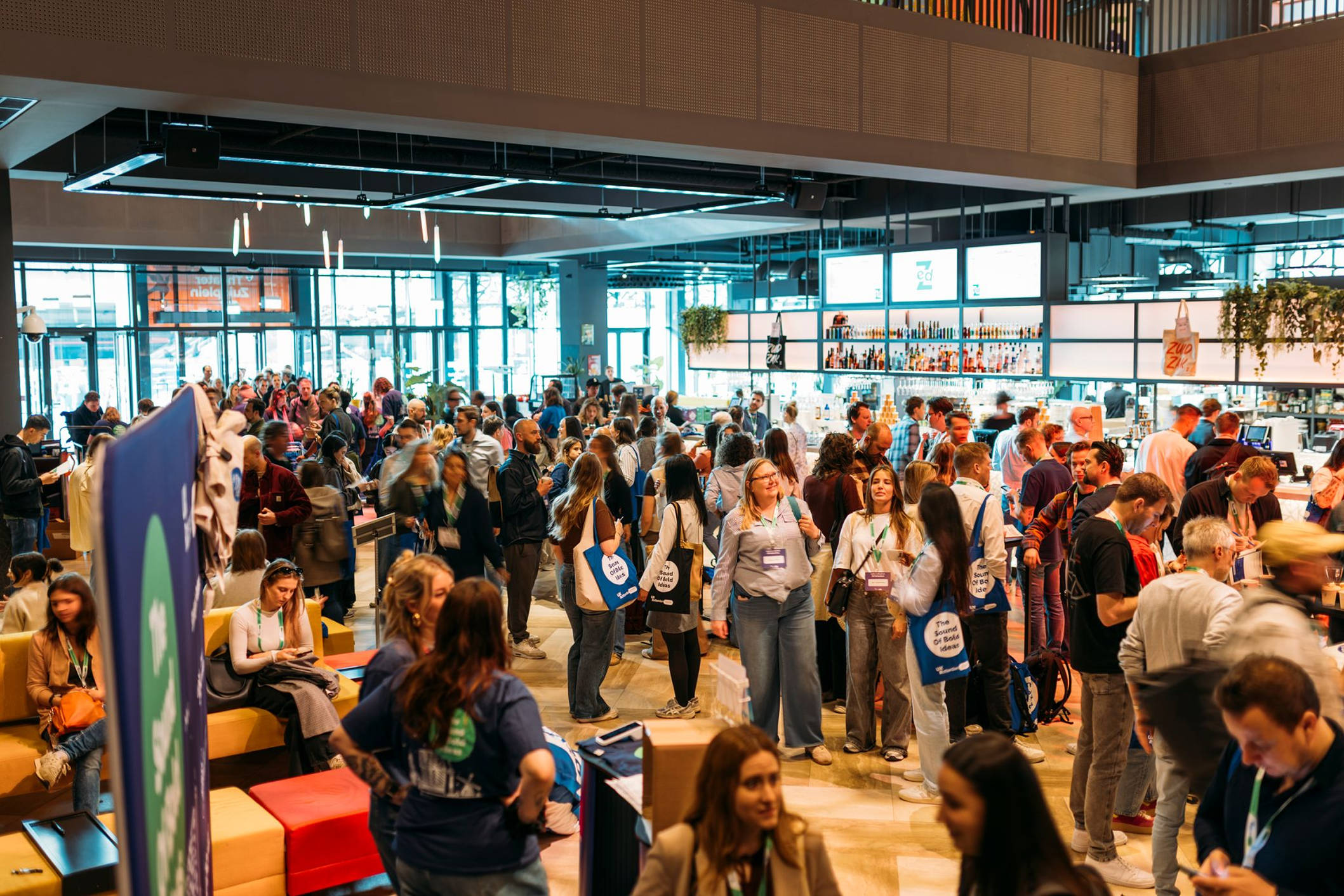
Love or die
Over the past decades, with the rise of Agile and the commercialization of our craft, we’ve too often made ourselves small for the greater good: the growth of our discipline. In the coming years, we have the chance to bring ourselves - our values and our purpose - along in this development. The most fascinating voice at UX Rotterdam came from speakers who passionately defended these human values. Making space to keep choosing love, empathy, curiosity, creativity or, for crying out loud, Play.
The real disruption, then, shouldn’t come from AI, but from the next wave of emancipation in our industry: that of the human being.
And luckily, that was also UX Rotterdam’s biggest strength right away: so many warm, kind people. Thank you, Nauko. Thank you, Pieter. Thank you, UX Rotterdam—see you next year!